The Four Planes of Development: Understanding Childhood Through Montessori's Eyes
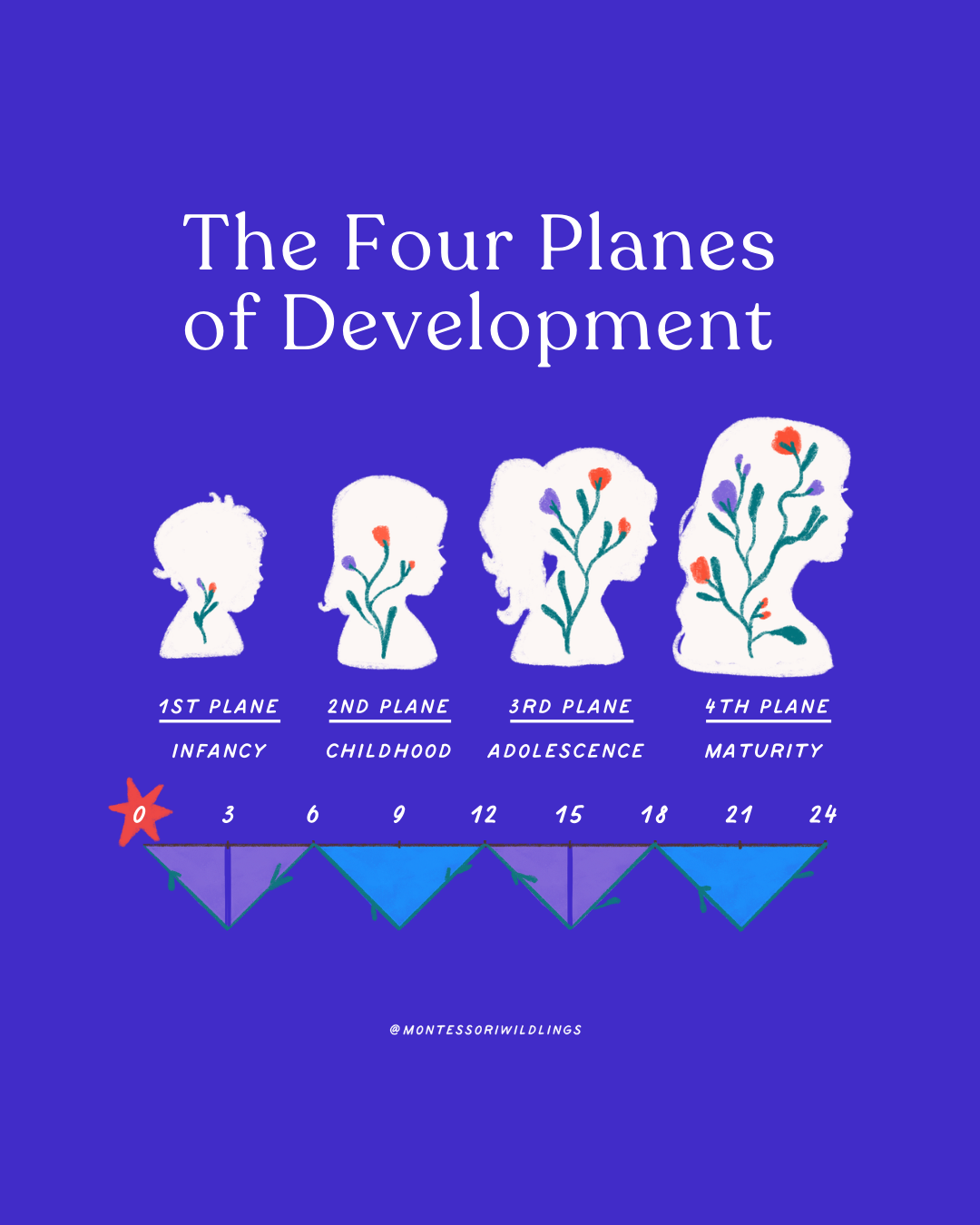
Maria Montessori didn't see childhood as one long stretch from birth to adulthood. She saw it as four distinct phases, each with its own characteristics, needs, and ways of learning. She called these the Four Planes of Development.
Understanding these planes changes how we approach children. It explains why a method that works beautifully with a five-year-old falls flat with a twelve-year-old. Why a toddler who was obsessed with order suddenly becomes a teenager who leaves clothes on the floor. But before we get too deep into the specifics, let’s take a closer look at the chart itself.
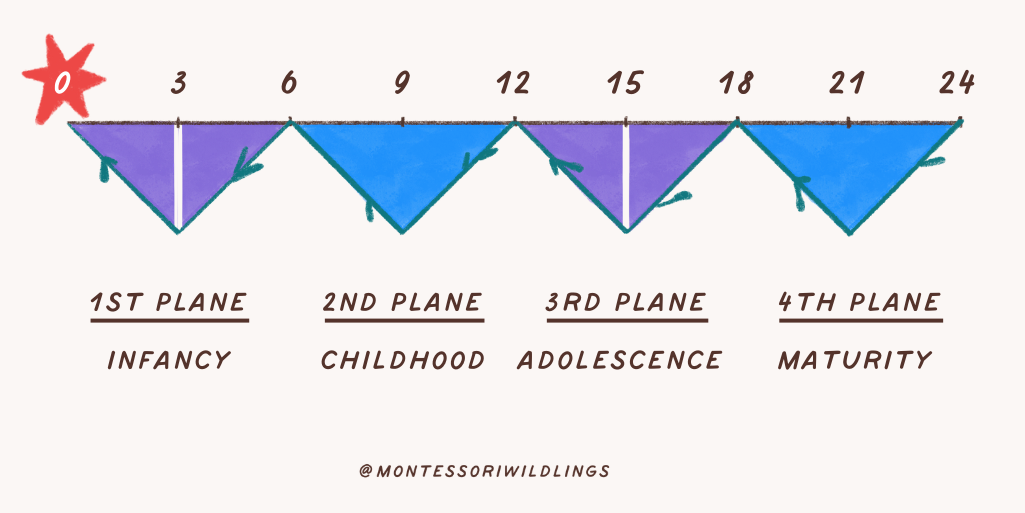
Drawn in Perugia in 1950, this wasn't your typical growth chart showing a smooth upward climb. Instead, Montessori mapped human development from birth to age 24 as four distinct triangles, each representing a six-year phase she called infancy, childhood, adolescence, and maturity.
The chart begins with a flame at birth, symbolizing the burst of vitality that launches us into life. A horizontal line across the top tracks a person's age, while within each triangle, two diagonal lines tell the real story. The line of progression grows as children develop new sensitivities and characteristics, reaching a peak about halfway through each phase. Then comes the line of retrogression, sloping back as the child integrates what they've learned and prepares for what's next. Where these two lines meet the age line, they form a triangle - a complete developmental cycle.
What's striking is that in this chart, all four triangles are identical in size and shape. Montessori was making a point: every stage matters equally. But she used colour to show their different qualities. The purple triangles (originally red) represent infancy and adolescence: intense, creative periods split into two sub-phases, marking them as times of dramatic transformation. The blue triangles represent childhood and maturity, undivided and calmer, suggesting steadier, more consolidated growth. This conveyed that development has its own rhythm, shaped by windows of sensitivity that open and close, and that respecting these natural cycles is essential to supporting a child's growth.
The First Plane: Birth to Six Years — The Absorbent Mind
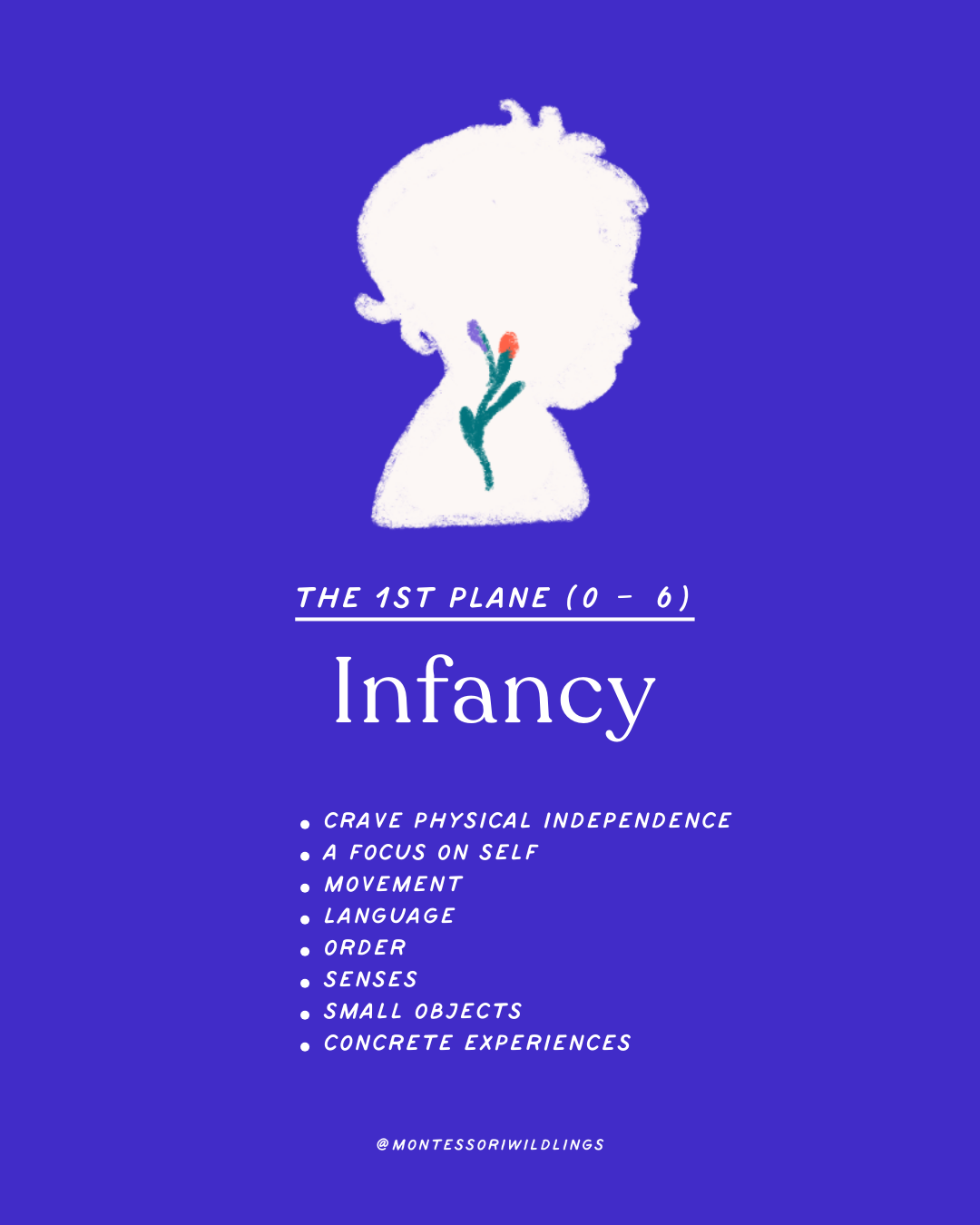
This is the phase of transformation. A newborn who can't hold their head up becomes a six-year-old who can read, write, climb trees, and hold complex conversations. The change is staggering.
Montessori called this period the "absorbent mind" because children literally absorb everything from their environment. They don't learn consciously the way older children do, they take it all in without effort. Language, movement, culture, order. Everything.
The first plane splits into two parts:
0-3: The Unconscious Absorbent Mind
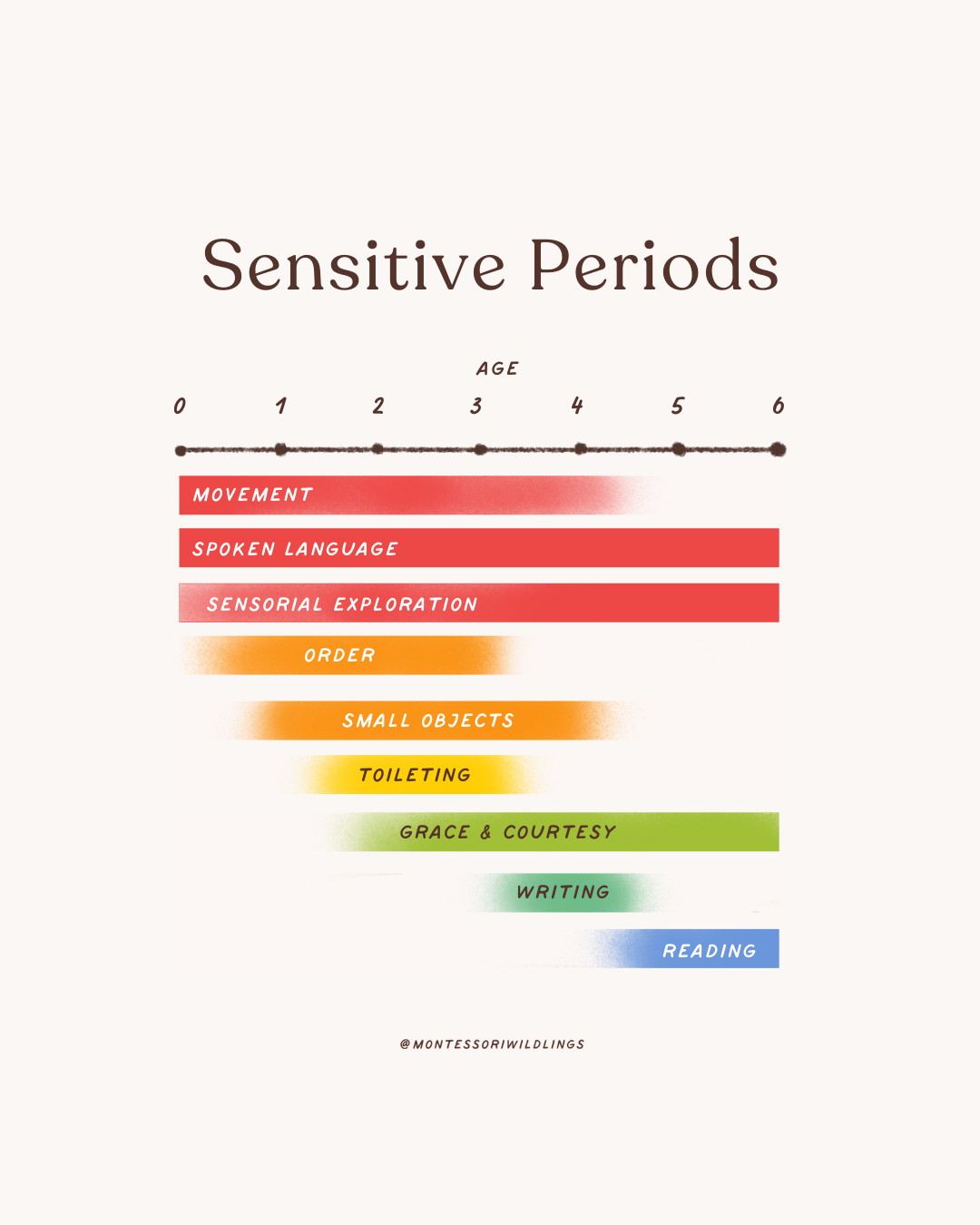
Children absorb without awareness. A baby doesn't decide to learn language, they just do. This is when sensitive periods are strongest. There are windows for language, order, movement, tiny objects. When we understand these sensitive periods, we can prepare environments that support what's naturally unfolding.
3-6: The Conscious Absorbent Mind
Around three, something shifts. Children become aware of what they're learning. They want to refine skills, practice deliberately, perfect their movements. This is when they're ready for purposeful work: pouring, buttoning, tracing letters. They're not playing at these activities. They're genuinely working, and they take it seriously.
Children in the first plane need order, independence, and respect. They need environments prepared for their size and abilities. They need time to concentrate without interruption. And above all they need adults who understand that a three-year-old who insists on doing their own shoelaces isn't being defiant or difficult - they're doing purposeful work, building themselves one loop and pull at a time.
The work of this plane is self-construction, and by six, the foundation is set.
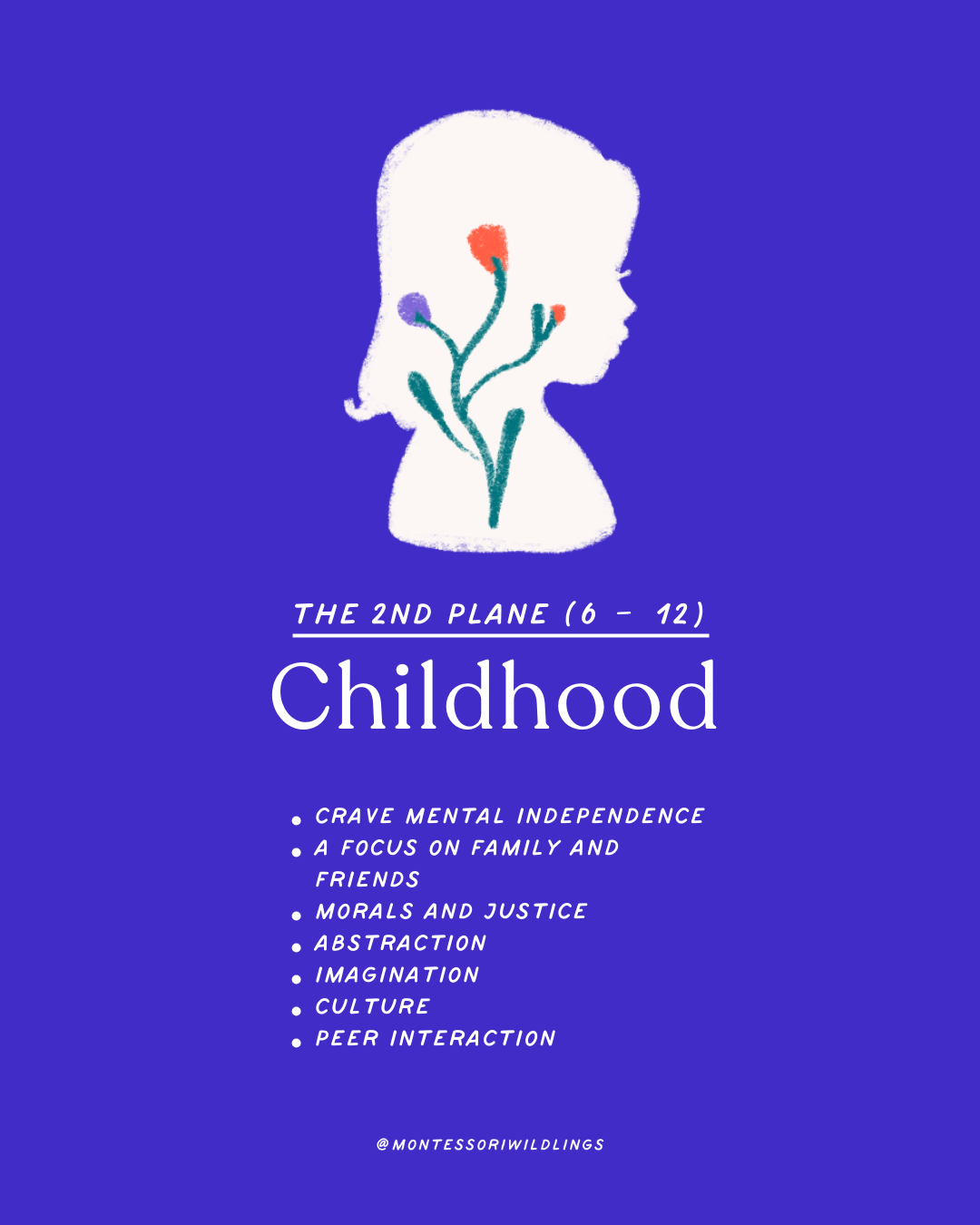
The Second Plane: Ages 6 to 12
Often described as a time of stability and strength, this stage is marked by a more reasoning, curious mind. Montessori saw it as a period of calm after the intensity of the first plane.
She observed that children in the second plane undergo a fundamental shift in how they engage with the world. Where the young child absorbed without question, the elementary-aged child now asks "why?" constantly, driven by what she called the "reasoning mind." This is the age of moral development, when children become intensely interested in fairness, justice, and the rules that govern human behavior.
They're also no longer satisfied with concrete, hands-on work alone; they crave the abstract, the cosmic, the interconnected stories of how things came to be. Montessori designed the elementary curriculum around this hunger, offering cosmic education - sweeping narratives about the universe, life, and human civilization that satisfy their need for grand context and meaning.
Socially, these children move outward, forming tight peer groups and caring deeply about their place within a community. They're developing their intellectual independence and moral compass, testing ideas against reason and working collaboratively to solve problems.
Montessori trusted this plane so deeply that she gave these children tremendous freedom to pursue their interests, knowing that their inner drive toward understanding and their emerging sense of responsibility would guide them.
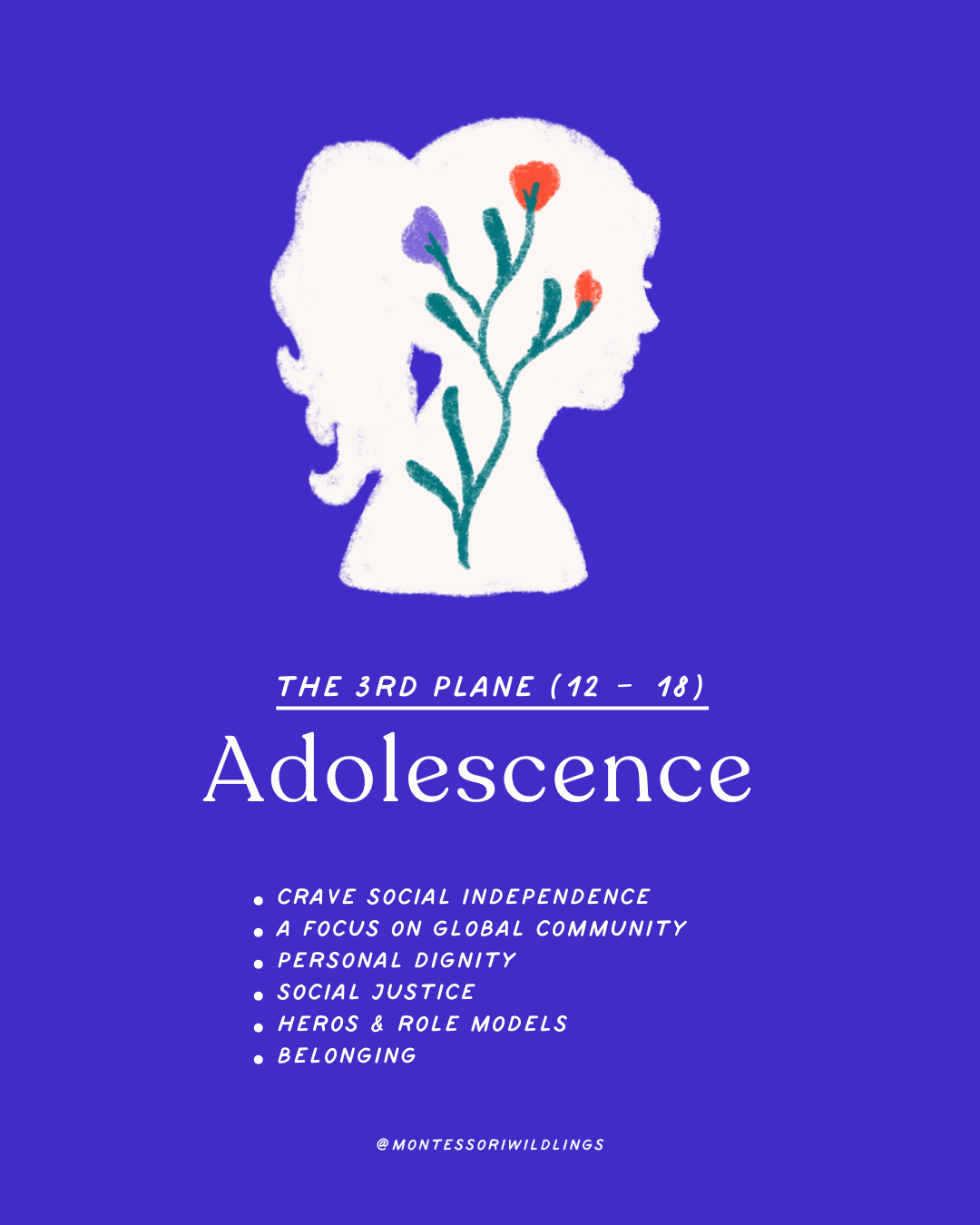
The Third Plane: Ages 12 to 18
The third plane returns to the intensity and upheaval of the first.
Like the first plane, it's split into two sub-phases, reflecting the dramatic shifts that occur during these years.
Montessori described adolescence as a period of such profound physical, emotional, and social transformation that it requires an entirely different educational approach. The body changes rapidly, often leaving teenagers feeling awkward and self-conscious. Sleep patterns shift, energy levels fluctuate, and there's a deep vulnerability beneath the surface bravado.
Montessori recognized that adolescents are constructing their social selves. They're figuring out who they are in relation to others, seeking independence from their families while desperately needing to belong to their peer groups. This isn't a time for traditional academic pressure or sitting at desks all day. Instead, Montessori envisioned farm schools, or Erdkinder, where adolescents could do meaningful, real work: running a farm, managing a small business, contributing to society in tangible ways.
She understood that teenagers need to feel valued, to test themselves against real challenges, and to see the direct impact of their efforts. The intellectual work of this plane doesn’t revolve around absorbing facts; it's about developing critical thinking, understanding their place in society, and beginning to ask the big questions about purpose, justice, and their own future. Montessori saw adolescents not as problems to be managed but as emerging adults who deserve respect, responsibility, and the chance to build themselves through dignified work.
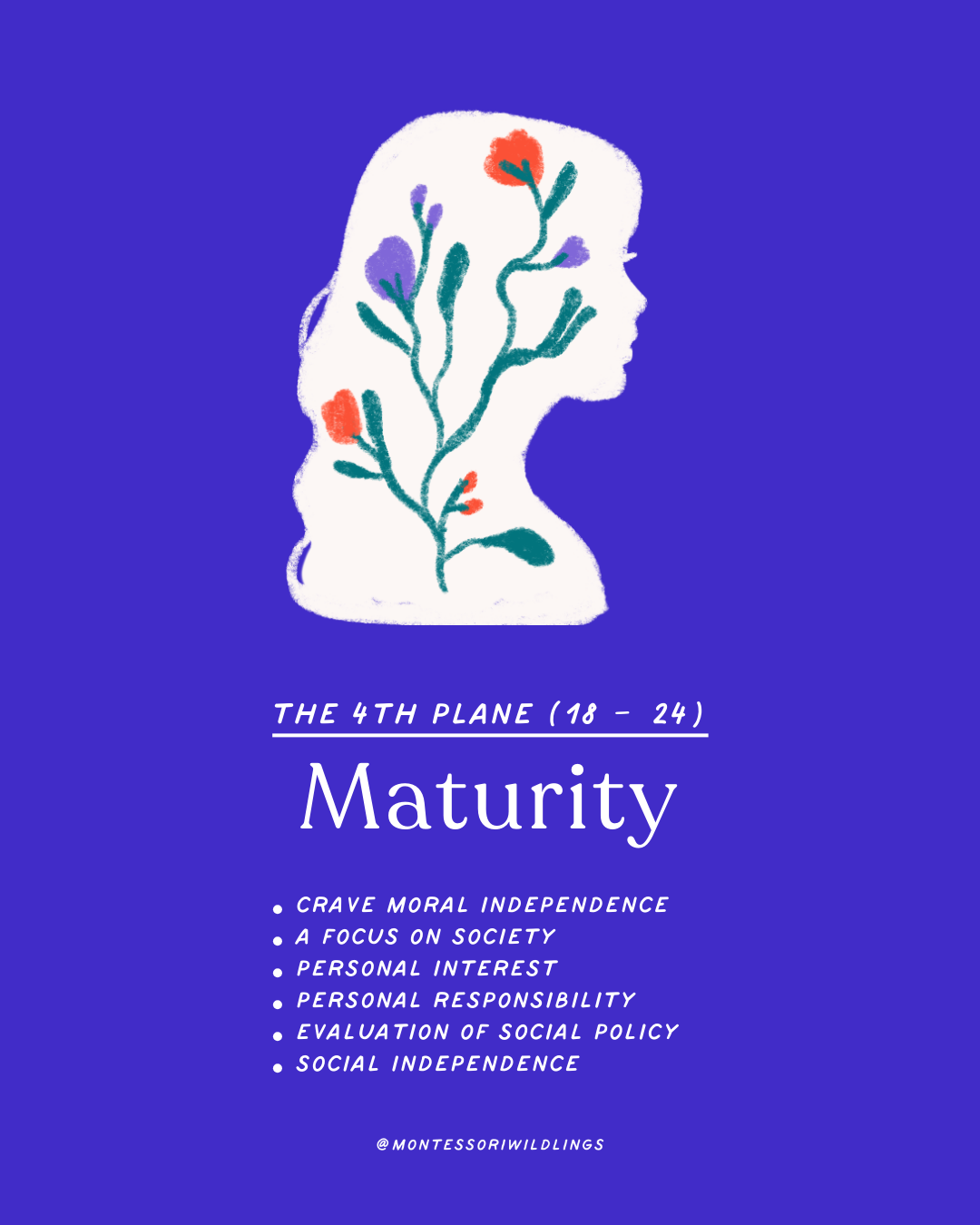
The Fourth Plane: Ages 18 to 24
The fourth plane of development marks the arrival into adulthood.
This final stage is calmer and more stable, much like the second plane. The intense physical and emotional upheaval of adolescence has settled, and young adults are ready to consolidate everything they've learned.
Montessori saw this as a time of spiritual, moral, and intellectual maturity, where individuals clarify their values, refine their sense of purpose, and prepare to take their place in the world. They're no longer just figuring out who they are; they're ready to contribute, to commit, to build lives grounded in the independence and self-knowledge they've developed through the previous planes.
The work of this stage is about choosing a path, deepening relationships, and stepping into responsibility with confidence. Montessori believed that if young people had been supported through each plane according to its unique needs, they would emerge from this final stage as capable, compassionate, and purposeful adults, ready to shape the future.
Well that’s it for this overview of the 4 planes of development, but If you're curious to dive deeper I highly recommend reading the NAMTA Journal Article on The Four Planes of Development. It goes deeper into everything we have covered here as well as looks at another, lesser known, chart Montessori drew about the planes of development, but this time resembling a bulb! It's definitely worth the read, enjoy!
More from the Blog