What is Montessori?
Here is a brief introduction to get you started with Montessori - just a small glimpse into what is a beautifully layered approach to childhood education.
Montessori is a child-centred approach that honours curiosity, independence, and the natural rhythm of development. Rather than relying on traditional instruction, rewards, or tests, it invites children to learn through purposeful activity, hands-on exploration, and meaningful work.
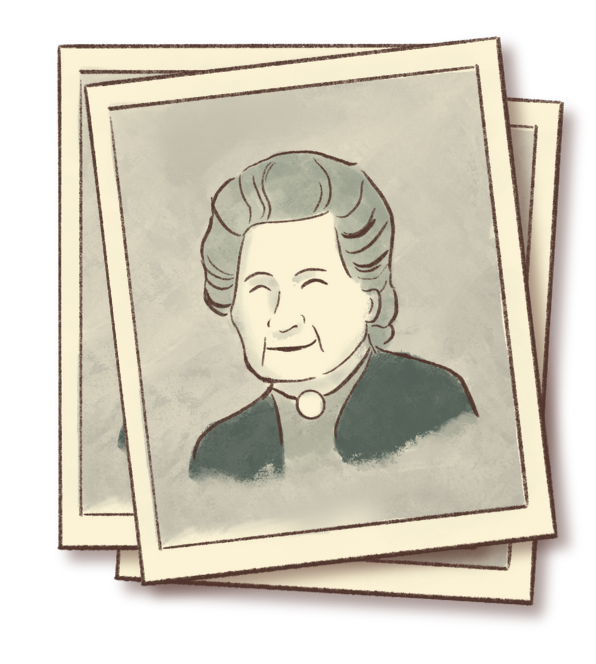
Developed by Dr. Maria Montessori, an Italian physician and educator in the early 1900s, the approach grew out of careful scientific observation. She noticed that when children were given freedom within a thoughtfully prepared environment, they chose work that helped them grow - academically, socially, and emotionally - without the need for constant direction.
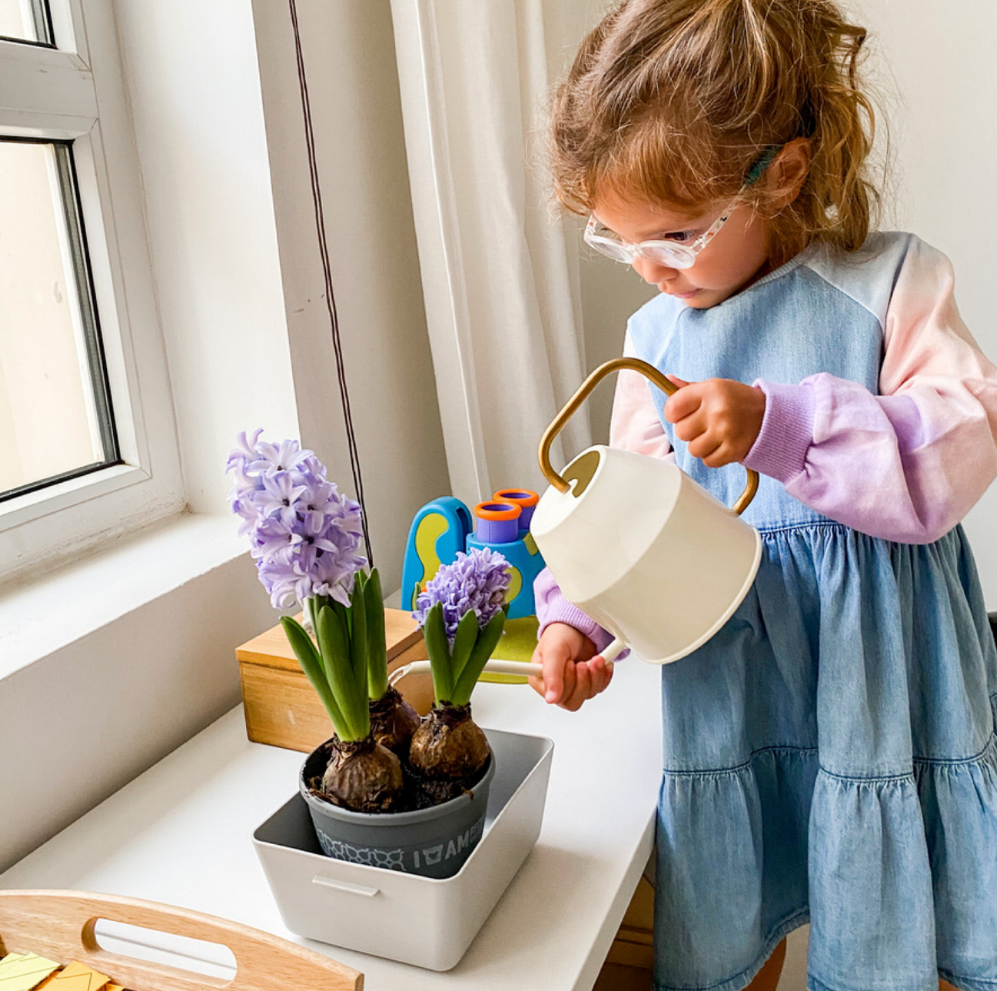
At the heart of Montessori is a deep respect for the child. Children are seen not as empty vessels to be filled, but as capable individuals driven by an inner desire to understand the world around them. The role of the adult is not to “teach” in the traditional sense, but to prepare the environment, offer carefully designed materials, and guide gently when needed.
You won’t typically find grades, gold stars, or frequent testing in a Montessori setting. Instead, progress is observed through concentration, confidence, independence, and mastery of skills. Learning unfolds at the child’s pace - steadily, deeply, and with joy.
Today, Montessori education is practised in thousands of schools and homes around the world. Whether in a classroom or a living room, its core remains the same: trust the child, prepare the environment, and allow meaningful work to do its quiet magic.

Cosmic Education
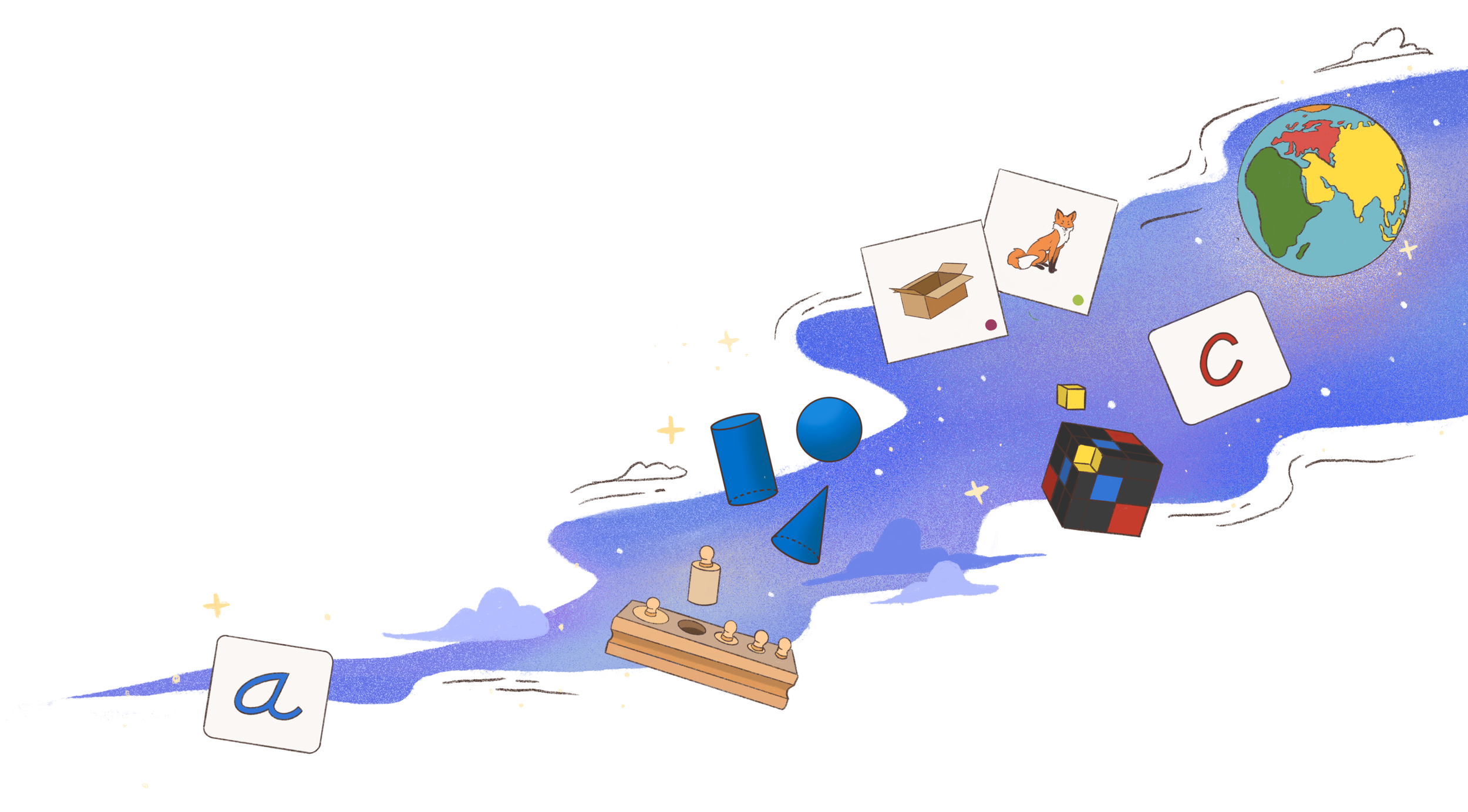
One of Montessori's most profound ideas is Cosmic Education: the concept that everything in our world is deeply, beautifully connected.
Prepared Environment
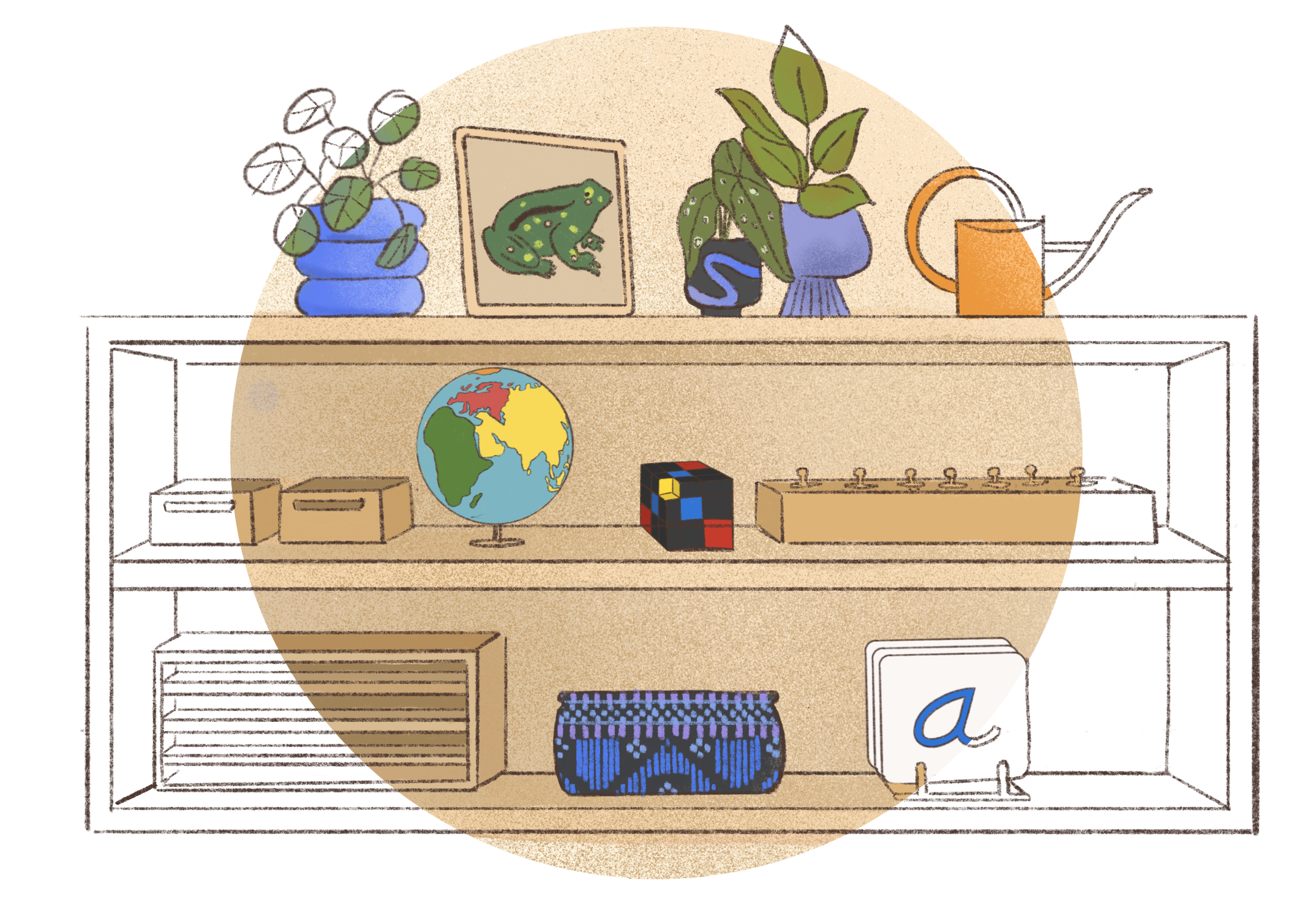
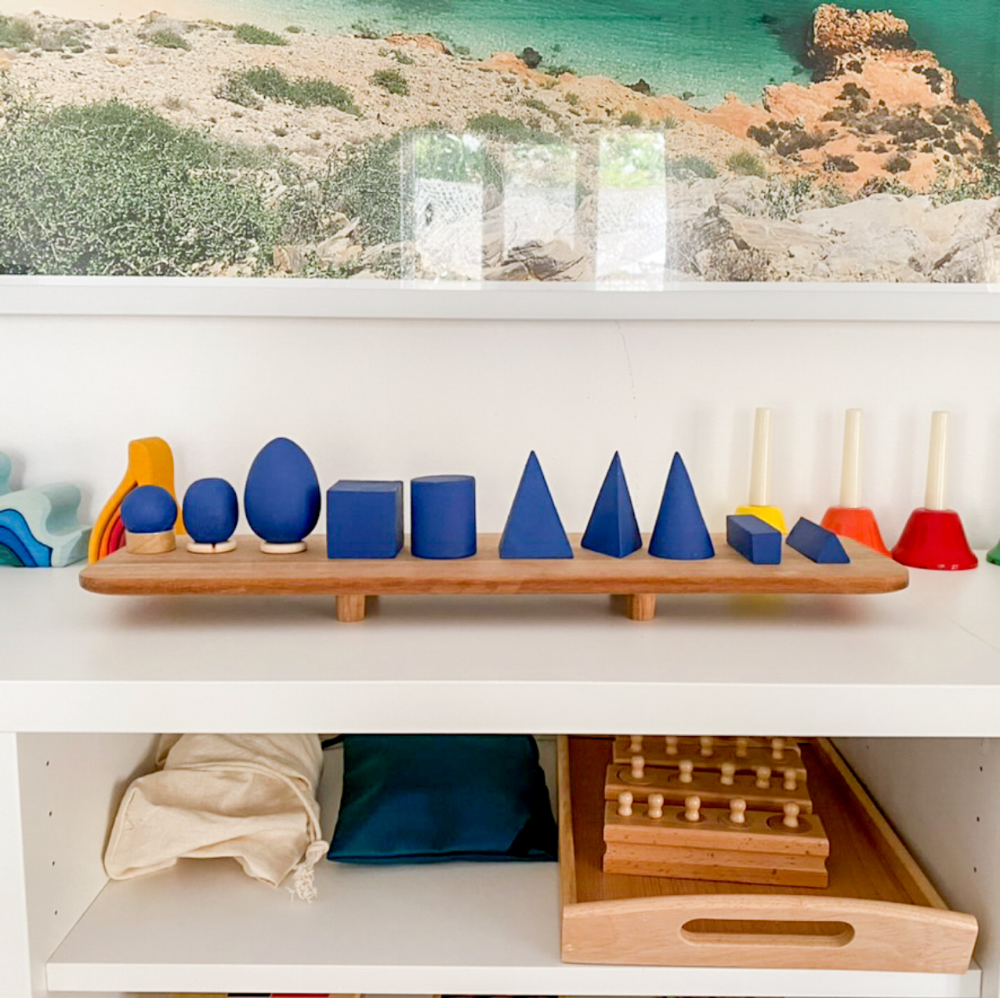
Maria Montessori believed the environment itself could be a teacher. The Prepared Environment is a space so thoughtfully designed that it invites children to explore, discover, and learn all on their own.
Curriculum
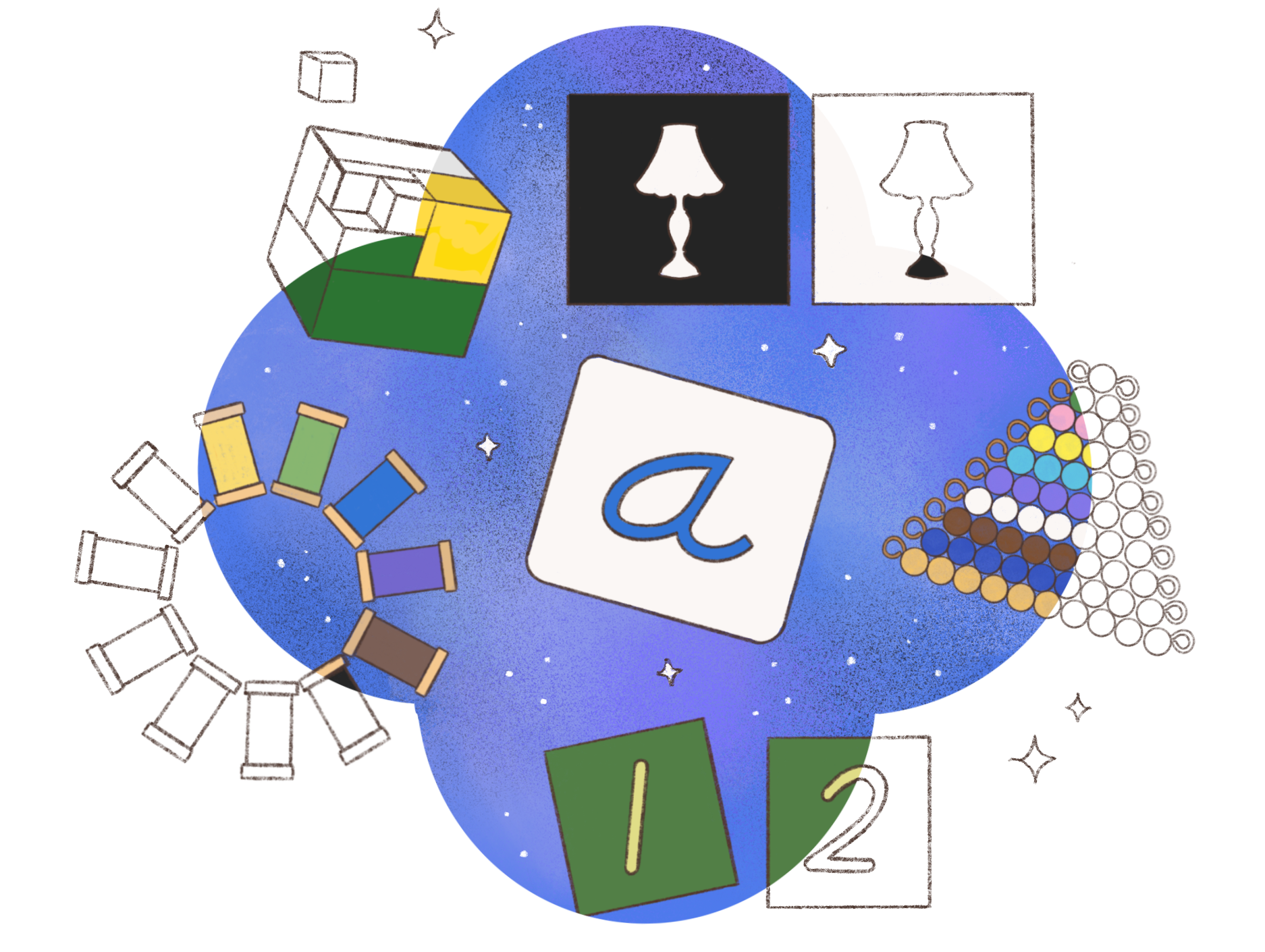
At the heart of Montessori is its deep respect for the child. The curriculum is tailored to each stage of development, it doesn't rush or push - it follows the child's natural rhythm and celebrates every step of the journey.


Key Principles of the Montessori Philosophy
There are several core principles that set Montessori apart from more traditional approaches to education.

-
Montessori learning is active and practical.
Children learn by doing: touching, moving, experimenting, and repeating. Materials are chosen for their ability to isolate concepts and engage the senses. Through real experience, children develop understanding from the ground up, moving naturally from concrete exploration to abstract thought as they are ready.
-
“Help me to do it myself” is a phrase often heard in Montessori circles, and for good reason.
So much of what happens in these environments is about supporting the child’s growing sense of agency. Simple routines like pouring water, sweeping, buttoning a shirt, become stepping stones toward independence. The adult’s role is to offer just enough help, and then to step back, allowing the child the dignity of doing things for themselves.
-
Montessori sees each child as a whole, capable human being.
This respect is reflected in the way adults speak, the way materials are handled, and the expectations set for behaviour. There is no rushing, no shaming, and no comparison.Just a quiet trust that each child will find their way, in their own time.
-
Rather than acting as a traditional teacher at the front of the room, the Montessori adult is more like a guide.
Their work is mostly behind the scenes: preparing the space, observing carefully, and offering gentle support when needed. The adult is there to protect concentration, model kindness, and step in only when truly necessary.
-
Everything has a place and a purpose.
Montessori spaces are beautifully & thoughtfully arranged with the child in mind.Materials are accessible, furniture is childsized, and the overall atmosphere feels calm, inviting, and orderly. The prepared environment is about making it possible for the child to act independently, to choose their own work, and to find real satisfaction in daily routines.
-
Children in Montessori settings are trusted with real choices.
This freedom isn’t about doing whatever they please, but about making meaningful decisions within gentle boundaries that keep everyone safe and respected. When children have the freedom to follow their interests, they naturally build focus, confidence, and a sense of responsibility for themselves and their community.
The Planes of Development
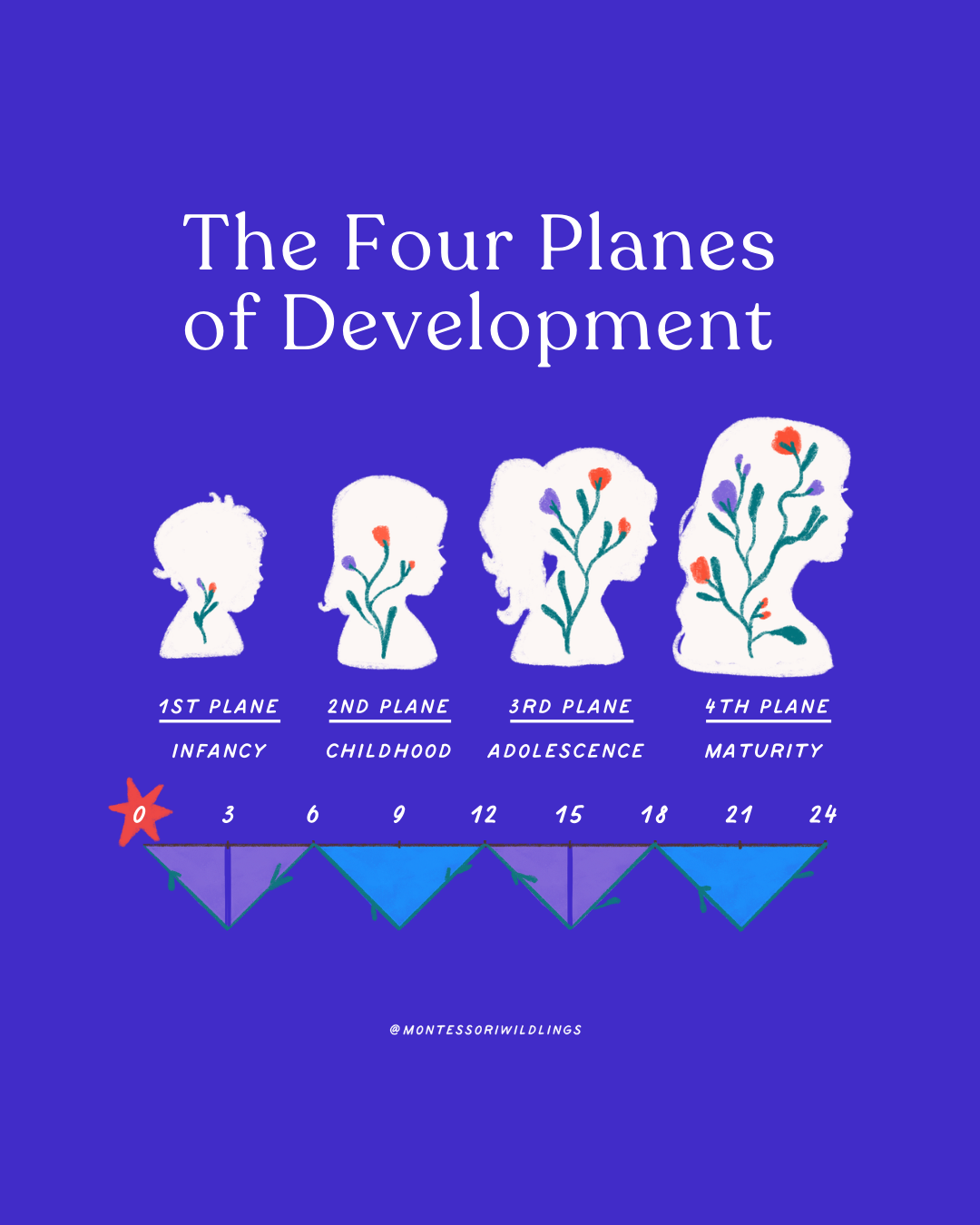
Maria Montessori viewed human development as a journey that unfolds from birth through to early adulthood. She described four Planes of Development, each with its own characteristics, needs, and ways of learning.

1st Plane (0 -6)
Infancy
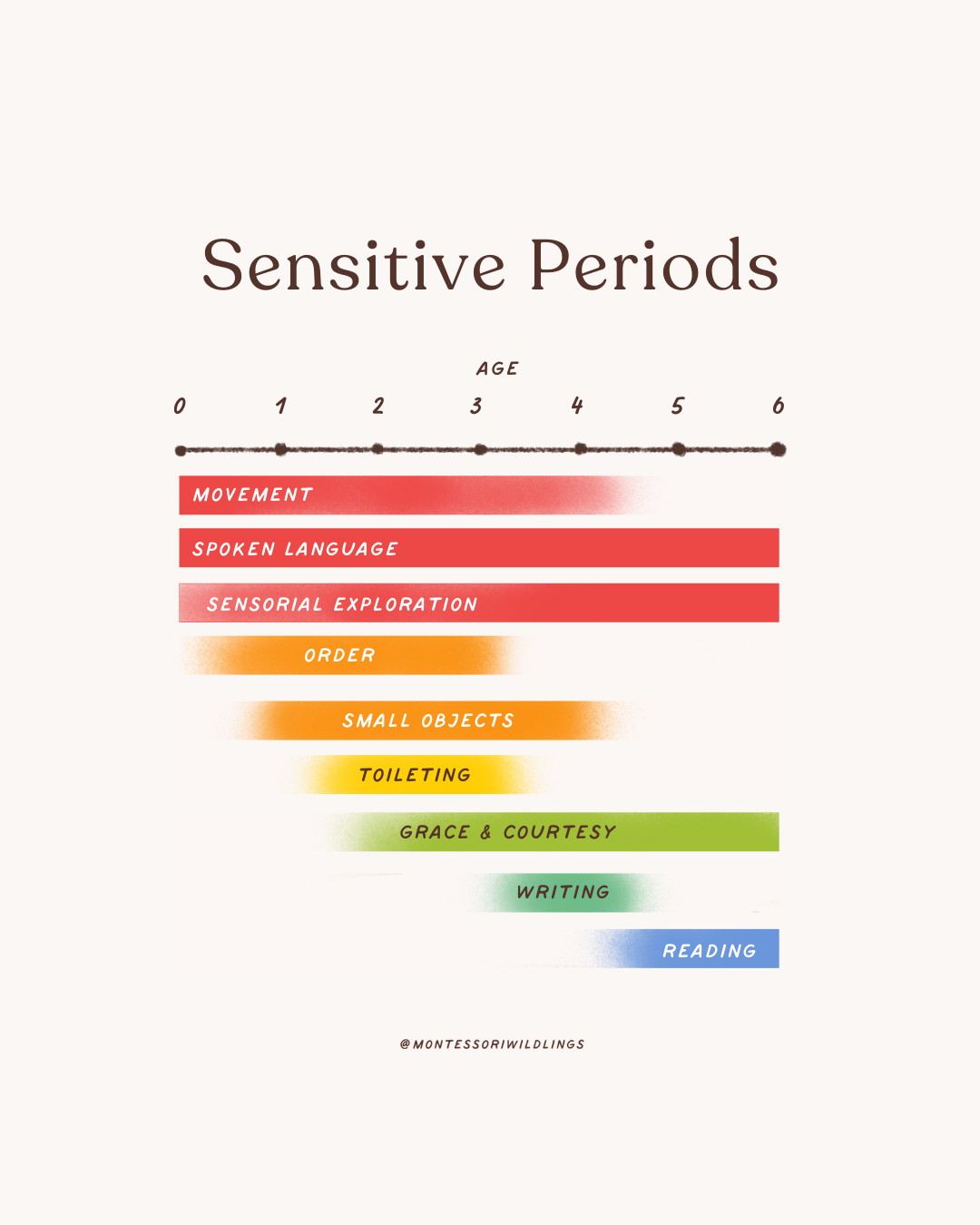
Montessori called this stage the Absorbent Mind. During these early years, the child takes in the world effortlessly, first unconsciously and then with growing awareness. It is a time of intense growth and sensitivity, where language, movement, culture, and identity are formed simply through experience.

2nd Plane (6 -12)
Childhood
Often described as a time of stability and strength, this stage is marked by a more reasoning, curious mind. With growing independence and imagination, they begin to question how the world works, develop a sense of morality, and seek deeper understanding through stories, discovery, and community.

3rd plane (12 -18)
Adolescence
This stage brings another wave of intense change: physical, emotional, and social. Much like the first plane, it’s a time of transformation, but now the work is inward as much as outward. Young people at this stage are often navigating big emotions, questioning their place in the world, and seeking real, purposeful work that connects them to others and to themselves.

4th plane (18 -24)
Maturity
In this final stage, the young adult steps more fully into the world, seeking to find their place and purpose. Montessori saw this as a time of consolidation, when all the earlier work of development begins to settle into a clearer sense of identity and direction. It’s a period of reflection, exploration, and stepping into adulthood with both curiosity and intention.
The 3-6 Curriculum
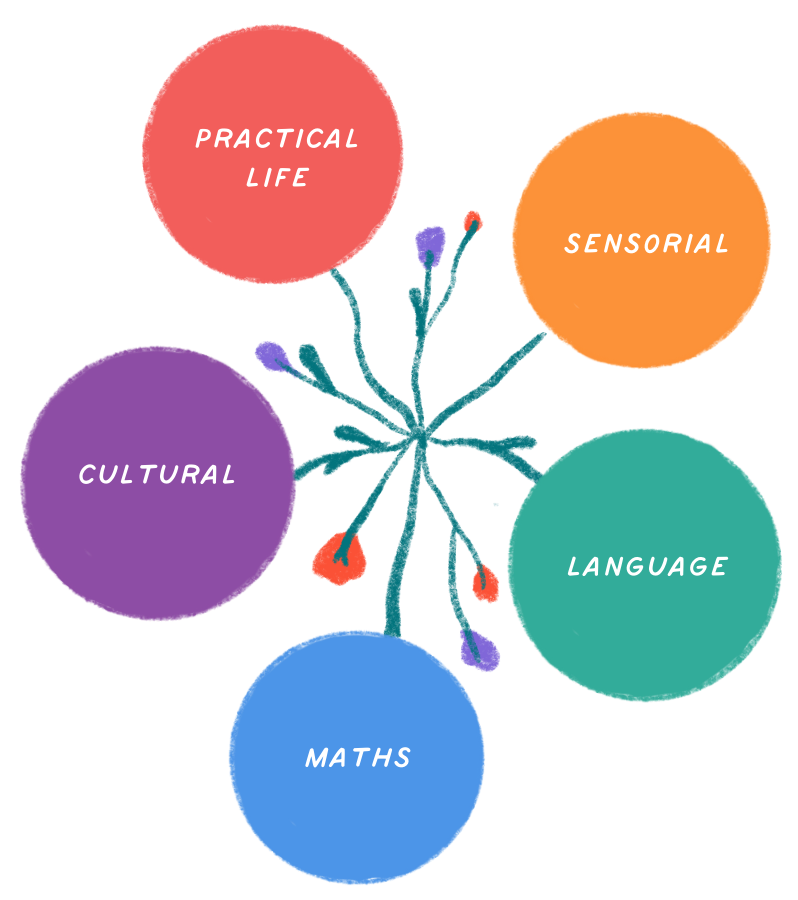
The Montessori curriculum adapts to each of the different planes of development. Many families first discover Montessori during the early childhood years, when children are between three and six, so let’s take a closer look at the core areas of the 3–6 classroom. The environment is traditionally organised into five key areas: Practical Life, Sensorial, Language, Mathematics, and Cultural studies. Each area supports the child’s growing independence, curiosity, and understanding of the world through hands-on exploration and meaningful work.
Practical Life
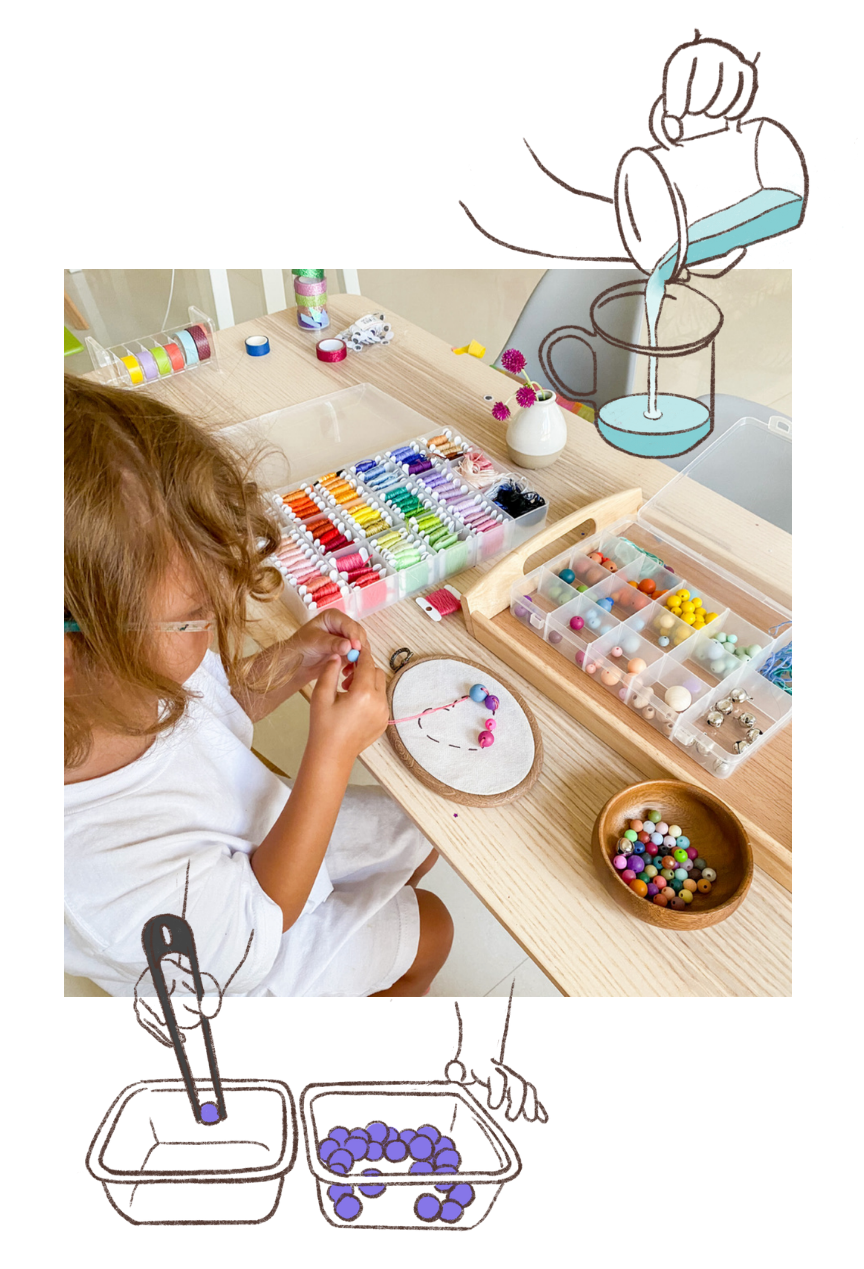
Practical Life helps children learn how to care for themselves, their surroundings, and others. Through real, purposeful activities, they build independence, concentration, coordination, and confidence. Grace and Courtesy lessons gently guide children in how to move through the world with respect, kindness, and consideration for others.
You might see children pouring water, sweeping the floor, preparing snacks, caring for plants or practicing saying “excuse me” — small, meaningful tasks that mirror everyday life and respectful interactions within the community.
Sensorial
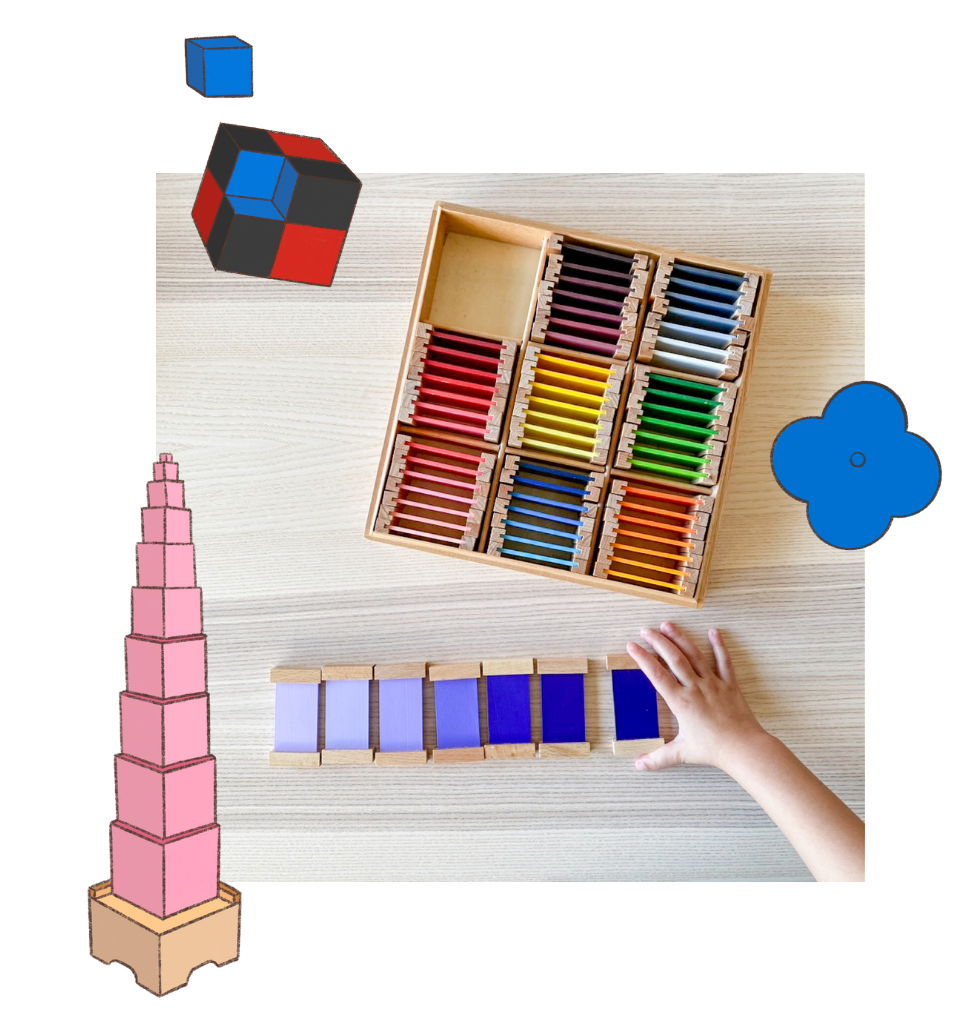
Sensorial materials help children refine and organise their senses as they explore qualities such as size, colour, shape, texture, sound, and weight. Through hands-on exploration, children begin to notice patterns, compare differences, and bring order to the many impressions they receive from the world around them.
These are often the materials people picture when they think of Montessori: the iconic Pink Tower, the Brown Stair, the Red Rods, colour tablets, sound cylinders, and other beautiful materials designed to isolate and explore one sensory quality at a time.
Language
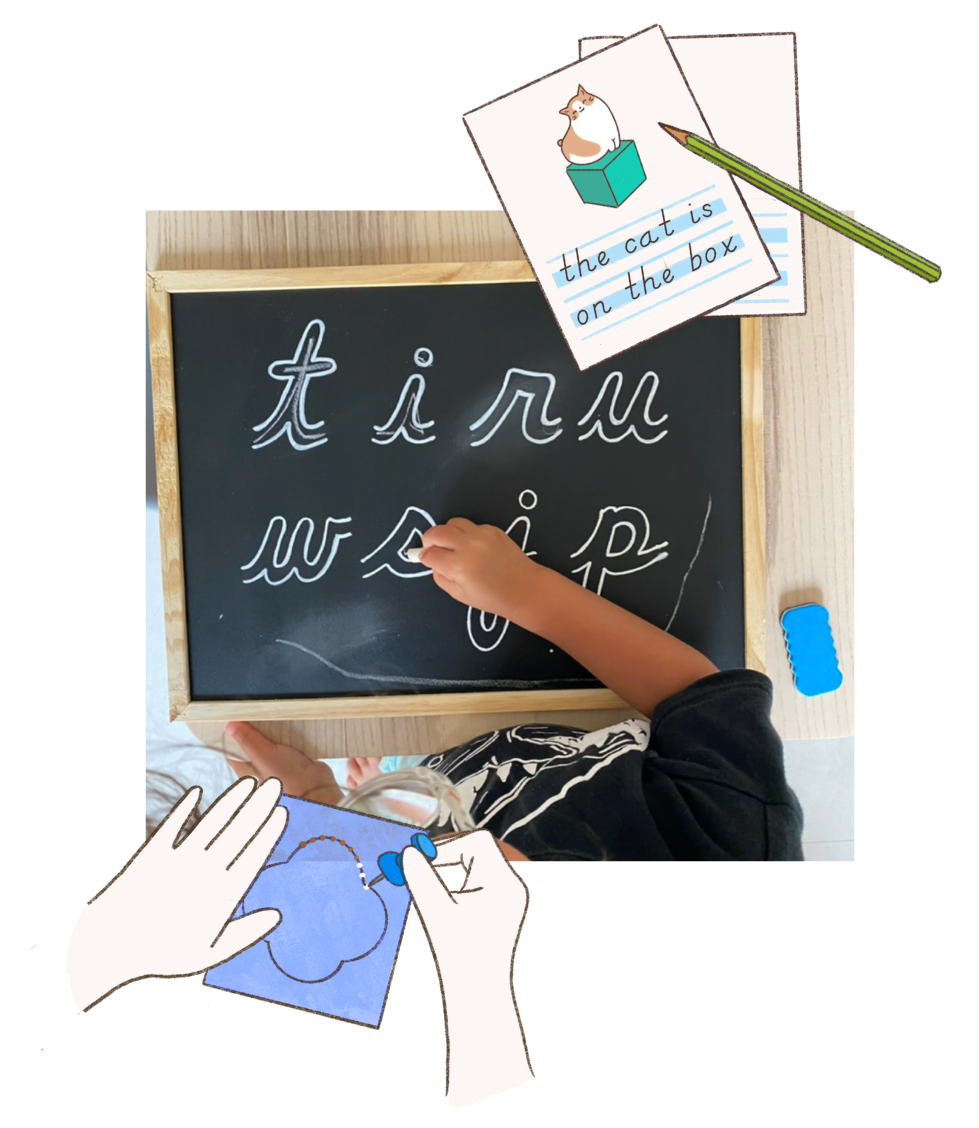
The Montessori language curriculum supports children as they move from rich spoken language to reading and writing. Through carefully sequenced materials, children build vocabulary, develop phonetic awareness, and gradually learn to express their ideas through written language.
Materials include sandpaper letters, movable alphabets, object and picture matching, phonetic reading activities, and early grammar work.
Mathematics
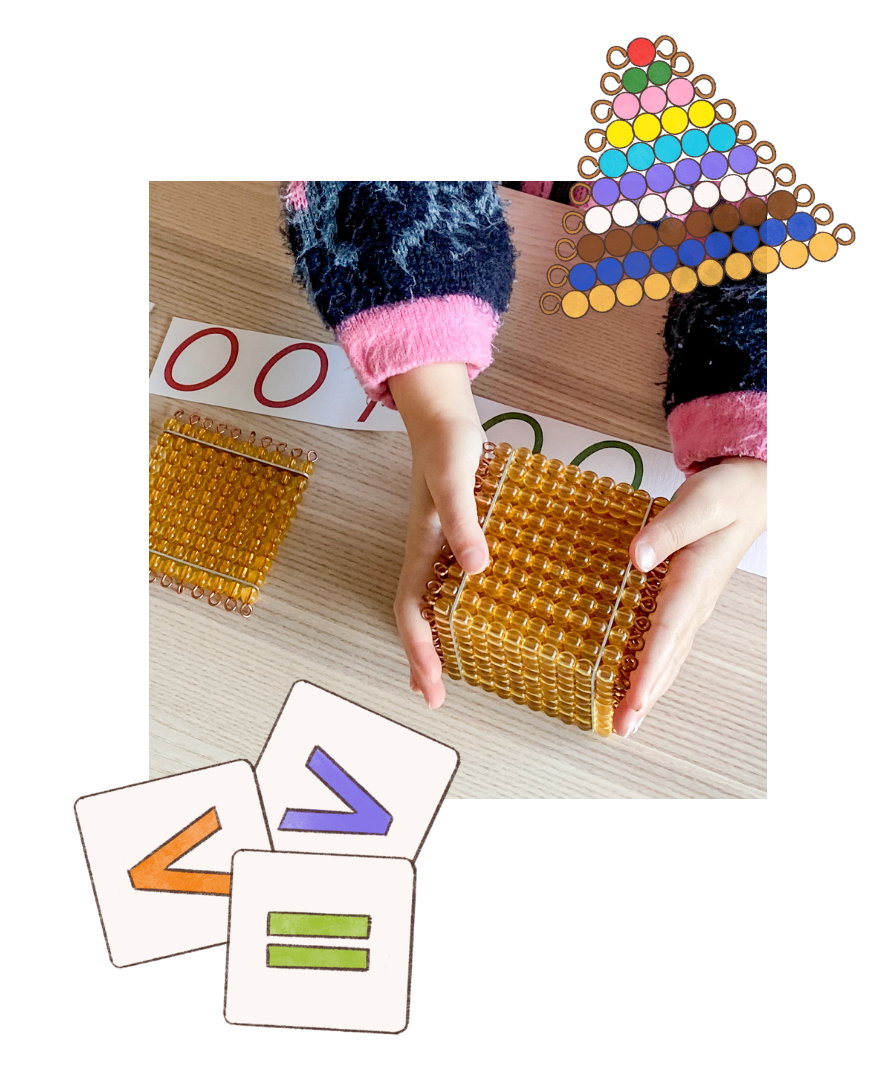
Montessori mathematics introduces children to numbers in a concrete and deeply visual way. Before working with abstract symbols, children explore quantity through hands-on materials that help them truly understand how numbers work. As their understanding grows, children gradually move from concrete materials toward more abstract thinking.
Examples include number rods, spindle boxes, golden beads for the decimal system, bead chains, and a wide range of materials that bring mathematical concepts to life.
Cultural
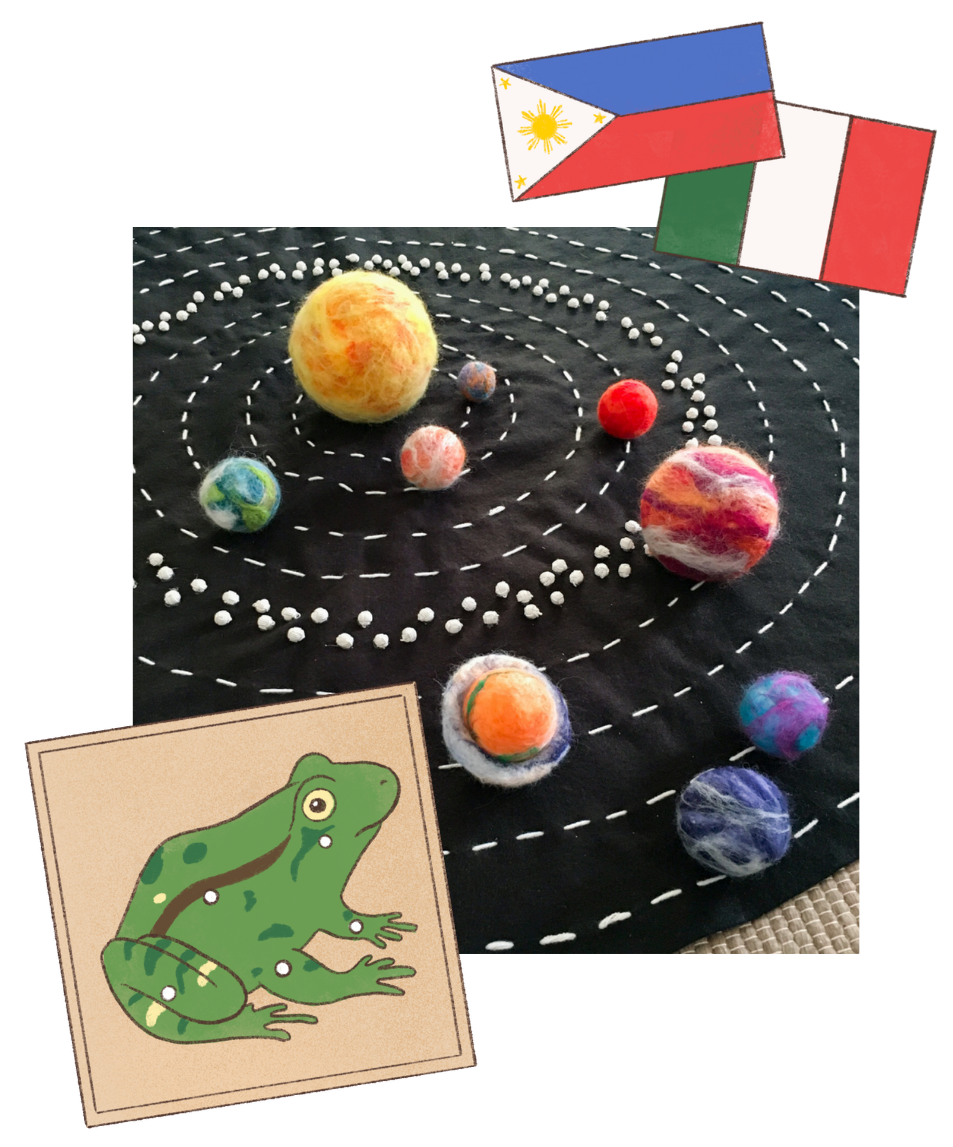
Cultural studies invite children to explore the wider world and their place within it. Through stories, materials, and hands-on activities, children begin to discover geography, science, history, art, music, and the interconnectedness of life on Earth.
Activities might include continent maps, land and water forms, botany and zoology materials, timeline and cultural traditions.
The Montessori Basics Course
New to Montessori and not sure where to begin?
Blog Posts on Montessori Basics